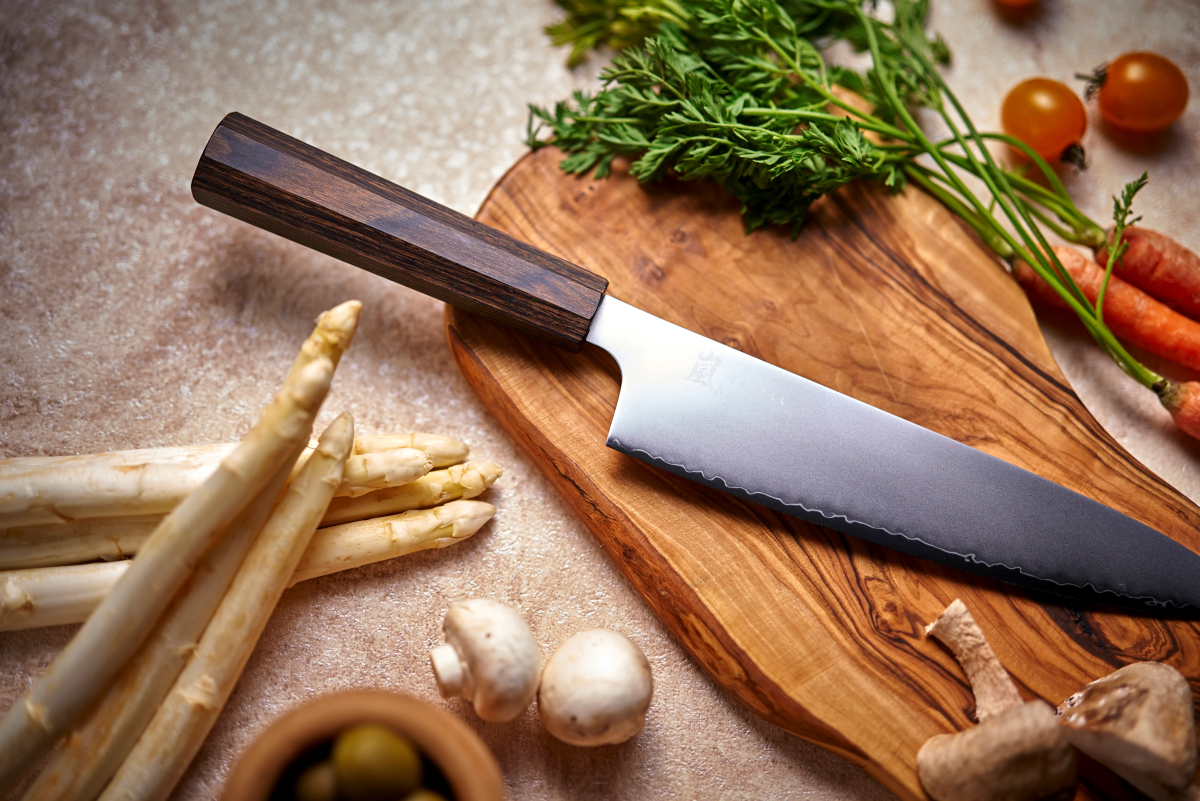
Yaxell — Japanese blades from Seki. A heritage that works in every kitchen
In the city of Seki, where steel has been hardened for centuries, Yaxell knives have been made since 1932 — tools that combine the tradition of Japanese masters with the engineering of the modern kitchen. This is a story about precision, durability, and the trust of chefs.
Seki: a place where blades have memory
Seki is often called the capital of Japanese steel. Here, in workshops combining ancient forging methods with controlled heat treatment, the character of weapons and tools that have stood the test of time was developed. Yaxell grows out of this tradition, adapting the rhythm of the forge to the demands of contemporary gastronomy: the steel is heated to a very high temperature, cooled with ice, and then hardened again to achieve the desired hardness, elasticity, and corrosion resistance. The effect is measurable — the cutting edge works longer and more predictably.
“A good blade does not need a spectacle. It just needs to cut evenly and always the same.” — a principle that craftsmen from Seki have repeated for generations.
Five collections, five characters
Choosing a knife is a decision about how we want to work with the product. Below are five Yaxell lines that meet different needs — from intensive professional kitchens to conscious home cooking.
Ran — VG10 steel and 69 layers of Damascus
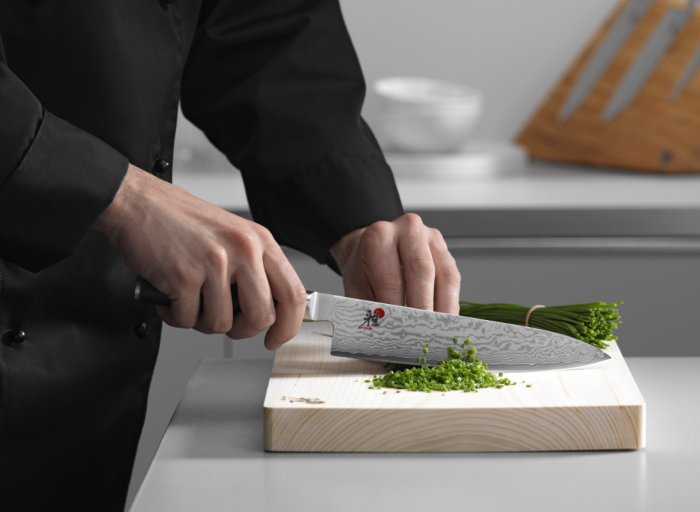
A VG10 core protected by 34+34 layers of Damascus on both sides gives Ran knives exemplary stability and ease of handling. This is a line that many chefs choose as their “everyday workhorse”: a dynamic start, smooth cut closure, excellent balance on the board.

Zen — hammered tsuchime, less sticking
Zen uses the same valued VG10 core but enriches it with a hammered blade texture. Micro air pockets reduce the suction of slices to the blade, so cutting root vegetables or fillets is faster and more predictable. This is ergonomics you feel from the first cuts.
Hana — SG2 powdered steel for the long haul
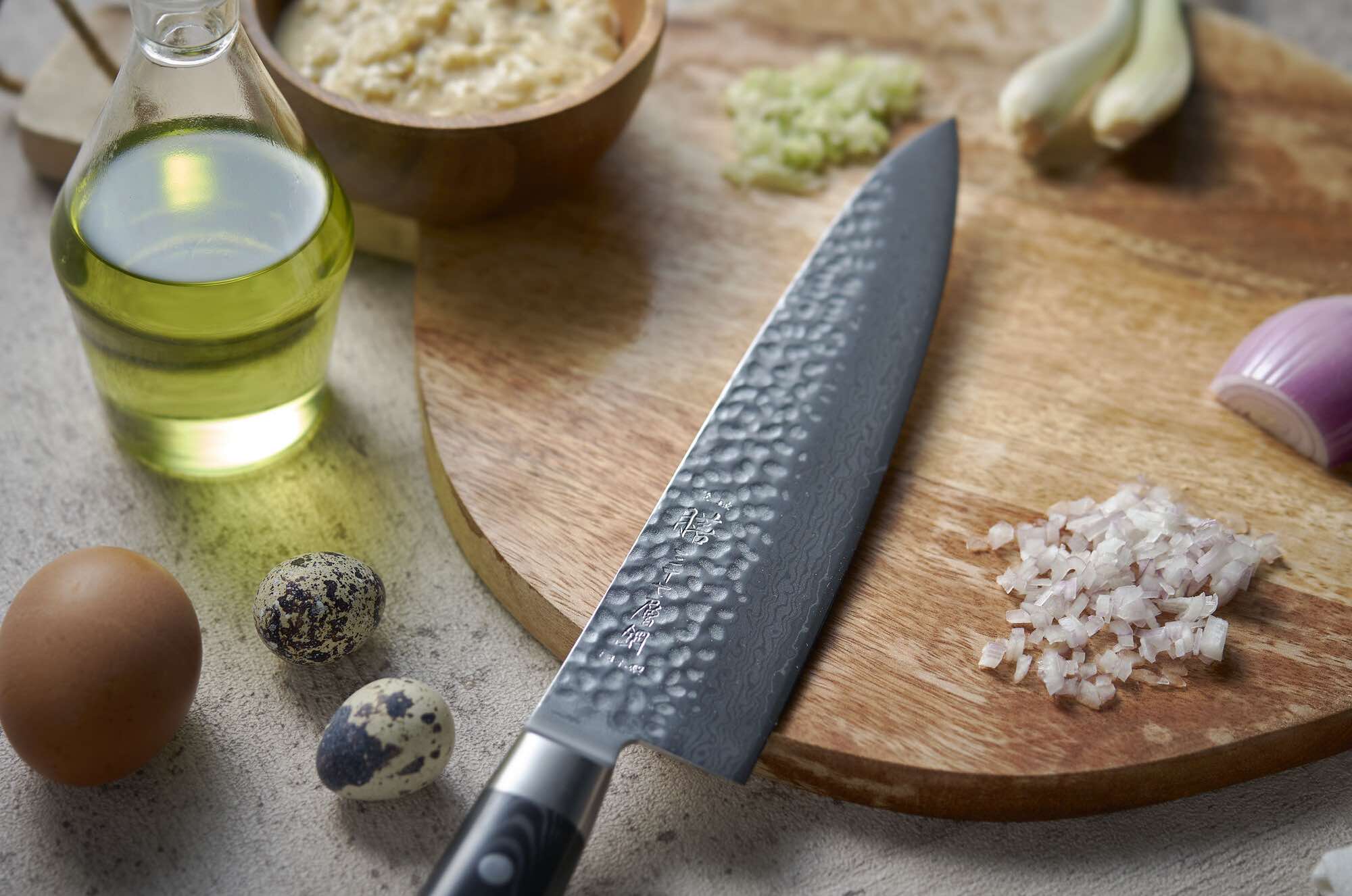
When edge retention counts, Hana comes into play. The core of powdered SG2 steel (known for very high hardness and fine grain) maintains edge aggressiveness for longer, and the Damascus shield stabilizes the blade’s performance. This is a tool made for long hours of production where service rhythm cannot falter.
Taishi — technical balance for everyday use
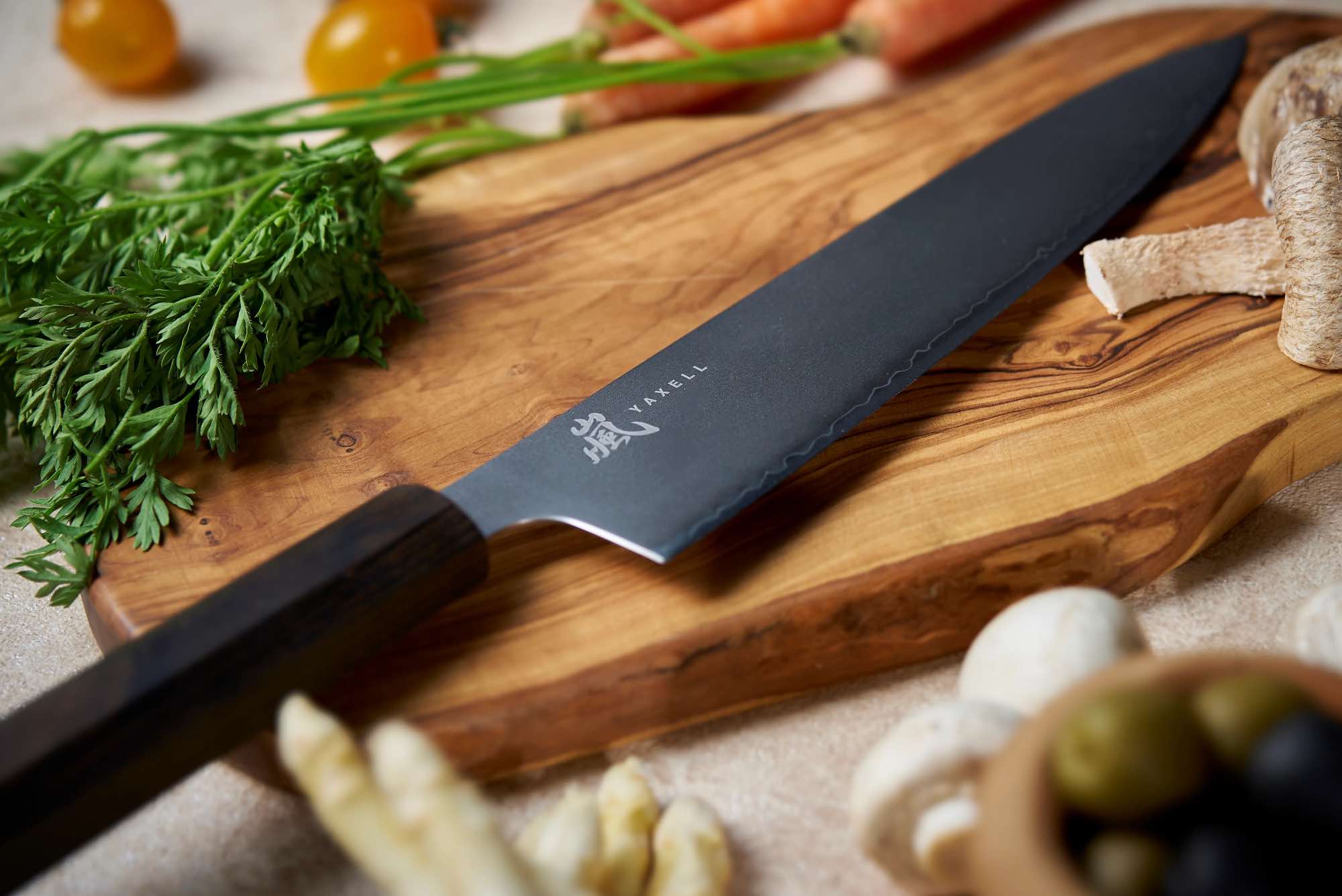
The Taishi profile is designed so that most kitchen tasks can be done with one knife: chopping, slicing, trimming small elements. This is conscious construction minimalism: without unnecessary decorations, focusing on geometry and work comfort.
Blue Breeze — lightness of cutting and quick adaptation
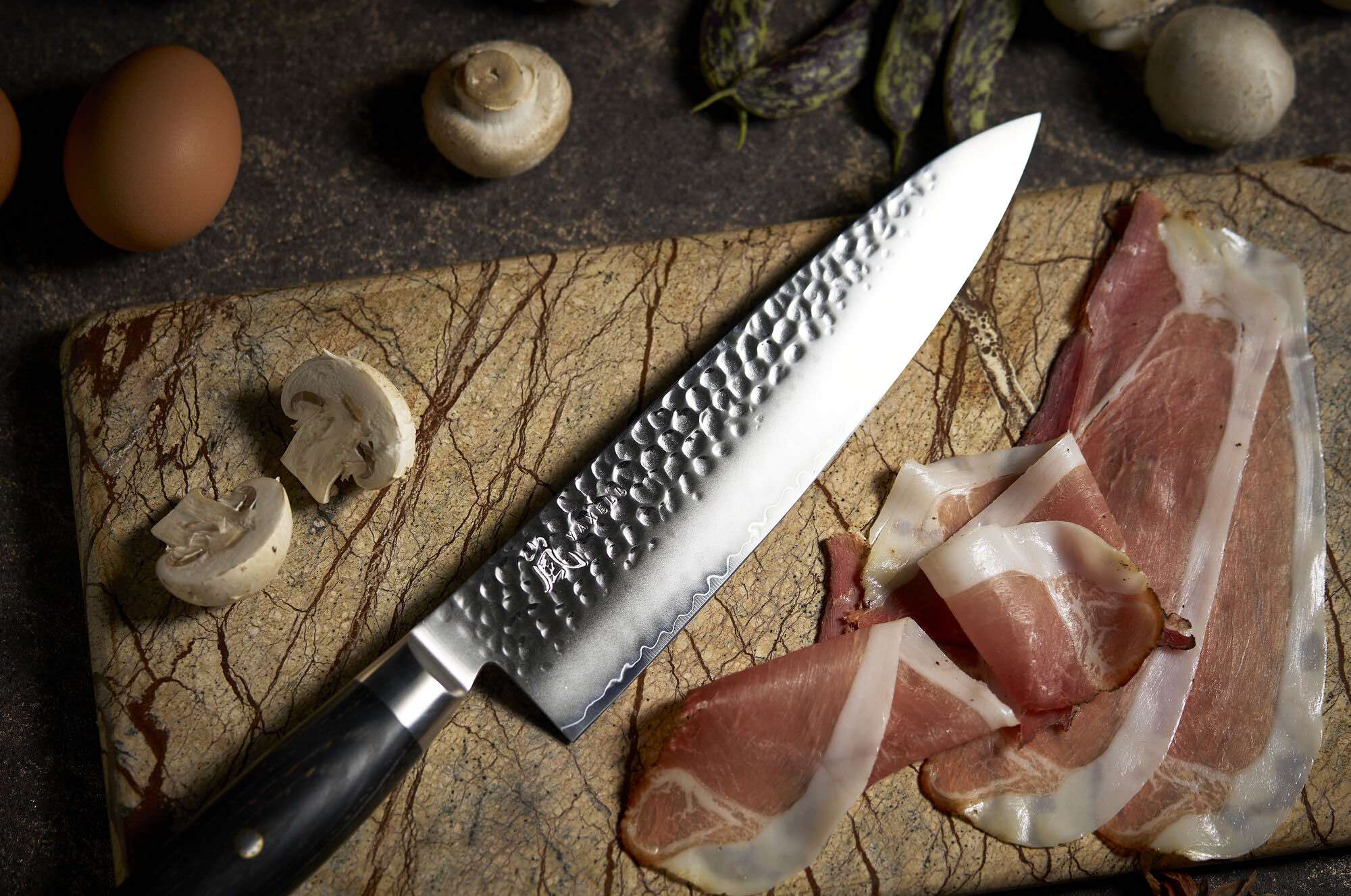
Blue Breeze is a line often chosen by those new to Japanese knives. Intuitive product entry, less resistance on long pulls, well-perceived blade control. It gives an immediate “difference effect” while not requiring long habit learning.

Eco-system: sharpeners, bags, scissors
Yaxell knives are just the beginning. The brand develops a full ecosystem of accessories that allow you to keep blades in optimal condition and transport them conveniently:
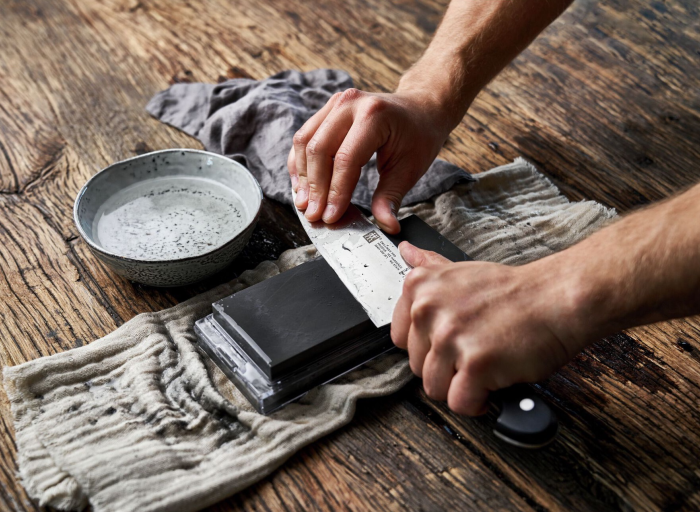
- Sharpeners — water and 3-stage, matched to VG10 and SG2 steels, with guides that help maintain the angle.
- Knife bags and cases — from compact 8-pocket to spacious 10-pocket organizers for chefs on the move.
- Kitchen scissors — cobalt-chrome steel, foldable design for hygiene and cutting precision.
Thanks to accessories, the user builds a coherent work system: blade, care, storage. Less improvisation, more control over the result.
What do you gain by choosing Yaxell?
- Cutting repeatability — an edge that maintains character and predictability over time.
- Longer blade life — the effect of precise heat treatment and refined geometry.
- Less effort — a blade that enters the product smoothly and finishes the cut without tearing.
- System support — sharpeners and organizers designed with specific steels and profiles in mind.
How to choose a line for your work style?
Intensive work, service, catering: Hana (SG2) as a base, Ran as a supplement for general tasks.
Ambitious home kitchen: Ran or Zen (less sticking) + simple water sharpener.
First Japanese knife: Blue Breeze — quick difference effect, easy adaptation.
One knife for most tasks: Taishi — reasonable profile and ergonomics.
Tradition that translates into flavor
At first glance, it’s just a blade and handle. In practice — the sum of experiences from Seki workshops, material decisions, and hundreds of grinds that determine how easily you dice an onion finely or how thinly you can slice raw fish. This is where the meaning of the Japanese approach reveals itself: fewer gestures, more effect.
Yaxell does not need flashy slogans. One is enough: consistency. If you are looking for a knife that works just as well today and in a year — and accessories that maintain this quality — reach for a line matched to your kitchen. Cutting precision will quickly become your new work standard.
Editorial note: it is worth consulting a advisor about steel selection (VG10/SG2) and geometry — profile and hardness affect sharpening comfort and edge retention.

 Polish